
What Poker Taught a Psychologist About Decision-Making: Maria Konnikova at Dent 2026
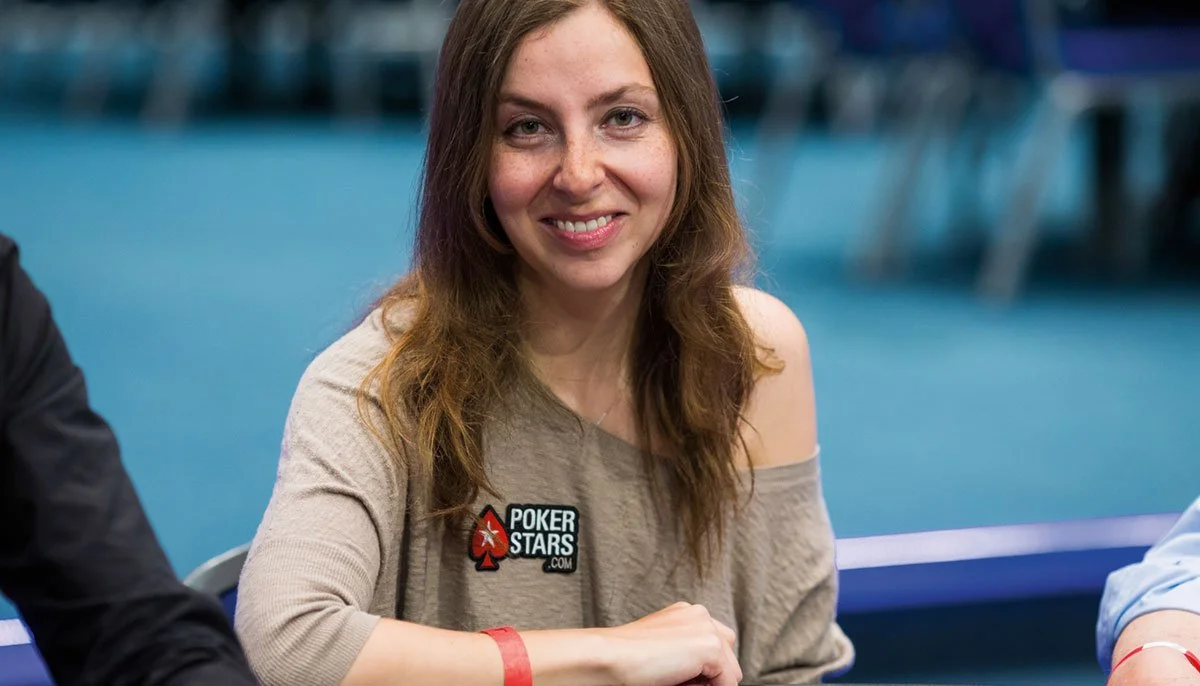
Maria Konnikova is an American writer, television producer, poker player, and podcaster
Maria Konnikova holds a PhD in psychology from Columbia. She's the New York Times bestselling author of Mastermind: How to Think Like Sherlock Holmes and The Confidence Game. She also has a World Series of Poker bracelet.
That last credential is more than a hobby, and it lives at the center of her academic work. It’s how she pressure-tested the research.
In 2016, Konnikova set out to study how people actually make decisions under uncertainty, with real money and real consequences on the line. She’d written extensively about cognitive biases, but she wanted to see those biases at work in a setting where being wrong cost something. She approached Erik Seidel, one of the most accomplished tournament players in poker history, and asked him to teach her the game. He agreed. The book that came out of it, The Biggest Bluff, traces what happened when a researcher trained by Walter Mischel went looking for the mechanics of skill, luck, and self-deception at the felt.
Yet she didn’t just write about poker. She won a World Series of Poker bracelet, the Eureka Poker Tour main event in the Bahamas, and went on to a career as a professional player. The book was a critical and commercial success, but the more interesting outcome was what poker did to her thinking about psychology. The lab tells you what people do when they know they're being watched. The poker table tells you what they do when there’s $50,000 in the pot and they’re trying to read the person across from them.
This is why we asked her back to the Dent stage in 2026.
The question Konnikova has spent the last decade chasing is one most leaders quietly grapple with every day: how do you tell the difference between a good decision and a good outcome? In poker, those two things come apart constantly. You can play a hand correctly and lose. You can play it badly and win. Discipline lies in evaluating the decision on its own terms, separate from the result. Most people, in most fields, can’t. They confuse process with outcome, attribute skill to luck and luck to skill, and learn the wrong lessons from their wins and their losses.
For founders, executives, and creators who spend their days making consequential bets without complete information, this distinction matters in concrete ways. It's the difference between building a discipline that compounds and chasing a streak that ends.
At Dent Santa Fe this September, Konnikova will explore the intersection of skill, chance, and the mechanics of the mind. Expect her to draw on both the published research and the stories that didn’t make it into the book. Expect her to be specific. She has watched, at very close range, how some of the best decision-makers in the world handle pressure, and how the rest of us mostly don’t. But she’ll show us how we can.
Dent 2026 runs September 13–15 at La Fonda on the Plaza. Konnikova joins a lineup that also includes journalist Julia Ioffe, author David McRaney, and National Geographic Fellow Chris Rainier.